




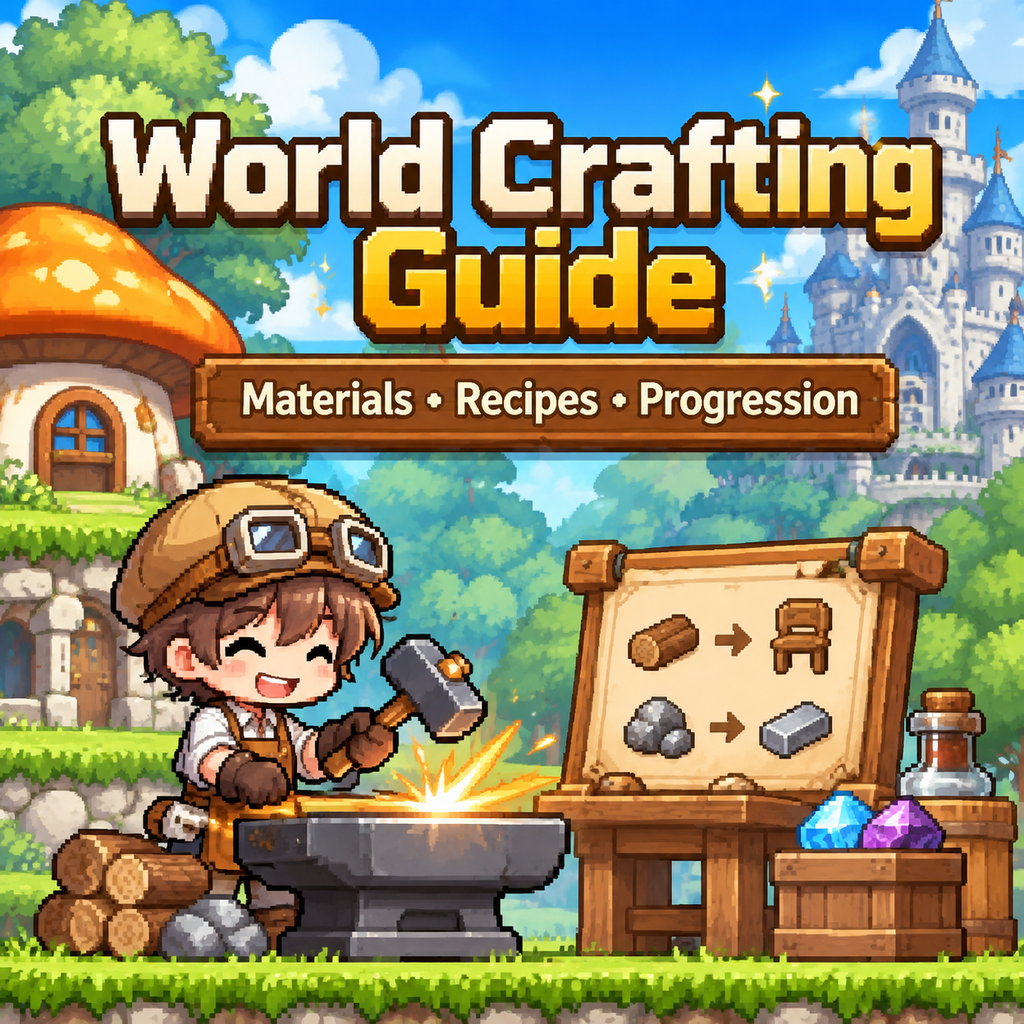
Crafting is an important part of progression in MapleStory Classic World. Leveling up and defeating monsters help you become stronger, but crafting gives you another way to improve your equipment and make use of the materials you collect along the way. Instead of selling every drop you find, you can save useful resources for weapons, armor, and other items that support your character.
The trick is knowing what to collect, which recipes deserve your attention, and when crafting is worth the expense. Some materials are easy to obtain during regular training, while others require dedicated farming or additional investment. A little planning can save you time and prevent your inventory from filling up with items you never use.
How Crafting Works in MapleStory Classic World
Crafting revolves around gathering ingredients, learning recipes, and using the appropriate crafting system to produce items. Depending on the recipe, you may need ores, refined materials, monster drops, or other components. Certain crafts also require mesos, so it is important to understand the full cost before committing to a project.
If you are new to crafting, start by checking the recipes available to your character. Look at the required materials, level restrictions, and finished item before deciding what to make. This helps you avoid farming ingredients for equipment that is no longer useful by the time you finish collecting everything.
A few habits make crafting easier to manage:
- Check recipe requirements before heading out to farm materials.
- Keep useful crafting components instead of selling every drop immediately.
- Compare new equipment with what your character already has.
- Save enough inventory space for potions, equipment, and quest items.
- Avoid spending heavily on recipes that provide only a minor improvement.
Your mesos are just as important as your materials. Buying missing ingredients can save time, but the expense adds up quickly if you craft without a clear plan. Managing your MS Classic World Mesos carefully lets you balance crafting with potion costs, equipment upgrades, and everyday training expenses.
Which Materials Should You Collect?
The materials worth keeping depend on your character’s needs and the recipes you intend to complete. Collecting everything might seem sensible at first, but inventory space is limited, and many drops have little value to your current progression.
Ores and Refined Materials
Ores are among the most recognizable crafting resources in MapleStory. Depending on the recipe, you may need raw ore or a refined version prepared through the appropriate NPC or crafting process.
Before refining anything, check the exact ingredients required by your target recipe. Some projects need refined materials, while others may require different components altogether. Processing everything immediately can waste resources if you later discover that you needed the original material.
It is also worth keeping a modest reserve of frequently used ores. This gives you flexibility when a useful recipe becomes available without forcing you to return to the same hunting ground every time.
Monster Drops
Monster drops can serve several purposes beyond selling them for quick money. Some are used in crafting recipes, while others may be required for quests or additional progression systems.
Pay attention to unfamiliar items before discarding them. If a drop appears in a recipe or quest requirement, keep enough to finish the objective. Once you have completed the relevant task, you can decide whether the remaining materials are worth storing or selling.
The most efficient approach is to collect materials while gaining experience. If the monsters you need for a recipe are close to your normal training area, you can make progress toward crafting without sacrificing an entire session to farming.
Rare Crafting Components
Some recipes require materials that are harder to obtain or only drop from particular monsters. These ingredients deserve more planning because collecting them can take considerably longer than gathering common resources.
Before farming a rare component, consider the following:
- How many pieces does the recipe require?
- Is the finished item useful for your class?
- Can you obtain comparable equipment through another method?
- Will the material be needed for a more valuable recipe later?
These questions help you avoid spending hours on a project that offers little practical benefit. Crafting should support your character’s development, not become an expensive task that delays everything else.
Choosing a Crafting Profession
Different crafting professions focus on different materials and finished products. Your choice should depend on the equipment you use, the recipes you want to unlock, and the resources you can obtain consistently.
Smithing is generally associated with metalworking and equipment production, while Weaponcrafting focuses on weapons and related components. Tailoring deals with cloth-based materials and clothing, Woodcrafting works with wood and certain weapon-related products, and Leatherworking uses leather materials for equipment. Arcforge covers specialized crafting associated with gems and related items.
Before investing heavily in any profession, check which recipes are available in your version of the game. Exact requirements, unlock conditions, and recipe availability can change between versions, so avoid relying on an old guide without verifying its details.
Choose a profession based on your immediate goals rather than trying to master everything at once. If your weapon is falling behind your level, prioritize recipes that can improve it. If your current equipment is already sufficient, gathering materials for a later upgrade may be a better use of your time.
Beginner Recipes and Material Preparation
Early crafting usually involves turning basic resources into components that can be used in more advanced recipes. Learning these processes helps you understand how materials fit together and prevents unnecessary spending on finished items.
Common examples of crafting activities include:
- Refining ores into metal components.
- Processing wood into materials for weapon-related recipes.
- Turning raw leather into usable crafting components.
- Preparing cloth for clothing and armor recipes.
- Refining gems for specialized crafting projects.
These are general examples rather than a guaranteed list of recipes available in every version. Always check your in-game crafting interface for exact ingredient quantities, fees, and requirements before gathering materials.
A useful strategy is to choose one target item and work backward from its recipe. Write down the required components, determine which ingredients you already own, and collect only what is missing. This keeps your inventory organized and gives each farming session a clear purpose.
How to Progress Without Wasting Materials
Crafting progression becomes easier when you treat it as part of your regular routine rather than a separate activity that consumes all your time. You can gather materials while completing quests, hunting monsters, or exploring new maps.
Start with recipes that match your current crafting level and character needs. Producing items you can actually use is generally more practical than repeatedly making unnecessary equipment just to consume materials.
Keep track of recipes that are temporarily out of reach. If you lack the required character level or a particular component, move on to another useful task and return later. There is no reason to force a crafting project before you have the resources to complete it efficiently.
It also helps to review your inventory regularly. Separate materials you need for an active recipe from items you are keeping for future use. Sell or discard unnecessary drops when appropriate, and avoid carrying large quantities of materials without a clear reason.
Common Crafting Mistakes to Avoid
One of the biggest mistakes is assuming that every crafted item is automatically an upgrade. A recipe may become available long before its finished product offers a meaningful improvement over your current gear. Always compare the item’s benefits with what you already have.
Another problem is overlooking the total cost. The price of ingredients, refining fees, and other expenses can make an apparently cheap recipe surprisingly expensive. If you are crafting for profit, calculate the full cost before producing items in large quantities.
You should also avoid spending all your resources on a single project. Keeping some mesos available for potions, repairs where applicable, and unexpected equipment needs gives you more flexibility as you progress.
Finally, do not ignore the value of your time. Farming materials yourself can save money, but it may not be worthwhile if the process takes hours and the finished item offers little benefit. Choose the method that best fits your character’s current situation.
Crafting for Equipment or Making Mesos
Players generally approach crafting with one of two goals: producing equipment for personal use or creating items that can be sold for a return. Each approach requires a different strategy.
If you are crafting for your own character, focus on practical upgrades. A better weapon or a useful piece of armor can improve your training efficiency and make difficult maps easier to handle. In this case, the value of the item comes from how it helps you progress rather than how much money you could receive by selling it.
If you want to earn mesos, pay closer attention to ingredient prices and market demand. A recipe is only profitable when the value of the finished item exceeds the combined costs involved in producing it. Prices can also change, so an item that sells well one day may be less attractive later.
Players familiar with MapleStory Global Mesos should remember that the economy and crafting details may differ between versions. Do not assume that a recipe, material price, or market strategy from another version will work the same way in MapleStory Classic World. Check current in-game information before committing your resources.
A Practical Crafting Routine
You do not need to spend an entire session crafting to make steady progress. A simple routine can help you collect materials and produce useful items without interrupting your normal leveling schedule.
Check your inventory before leaving town.
Choose a recipe that supports your current equipment goals.
Identify the monsters or locations that provide the required materials.
Collect ingredients while gaining experience whenever possible.
Return to the appropriate crafting NPC when you have enough resources.
Review the finished item and decide whether to equip, store, or sell it.
This approach keeps crafting manageable, especially when you are still learning which materials are valuable. As your character grows stronger, you can gradually work toward more demanding recipes without neglecting your other progression goals.
Crafting in MapleStory Classic World is most useful when you approach it with a clear purpose. Learn the recipes that matter to your character, collect materials during regular hunting sessions, and avoid spending resources on upgrades that will not make a meaningful difference.
You do not need to master every profession or collect every possible material. Start with a practical goal, keep your inventory organized, and review the cost of each project before committing to it. Over time, crafting can become a reliable way to improve your equipment, make better use of monster drops, and manage your mesos more effectively.
The best crafting strategy is not necessarily the one that produces the most items. It is the one that helps you progress without wasting the time and resources you worked hard to collect.