



A squad holding the upper floors of a building can be difficult to dislodge in Warzone. Stairwells create narrow entry points, windows provide useful firing angles, and several floors of concrete can make a direct attack costly. Impact Warhead introduces a different threat to these defensive positions. Added in Season 1, this Killstreak sends an explosive payload through multiple floors before detonation, giving attacking teams another way to reach opponents behind structural cover. Players following seasonal content and CoD MW4 Redeem Codes can also keep an eye on how these updates expand the game’s available content.
How Impact Warhead Works
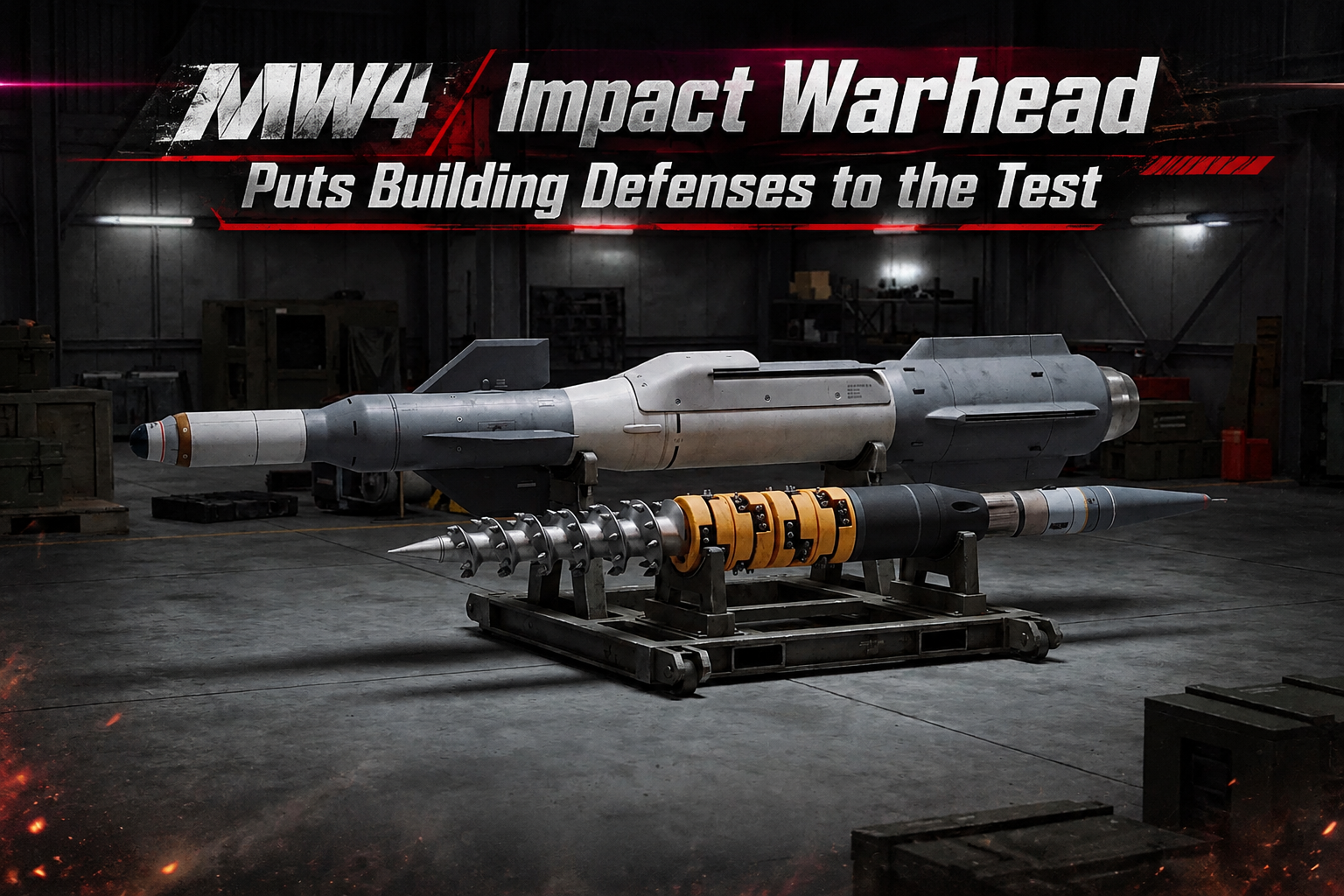
Impact Warhead is one of the Killstreaks featured in the Warzone Season 1 update, which launched on November 5, 2026. Its defining feature is the ability to penetrate multiple floors before the payload explodes. This makes it particularly relevant in encounters where an enemy squad has settled inside a multi-story structure and is difficult to reach through conventional routes.
Its design places the emphasis on direct explosive damage. Although Raven Software draws a comparison between Impact Warhead and the existing Bunker Buster, the two have different effects after reaching their targets. Impact Warhead does not produce an additional Gas effect, keeping its role centered on the initial explosion rather than prolonged area denial.
That distinction gives the Killstreak a specific purpose in building engagements. An attacking squad may know that opponents are occupying an upper floor but have limited opportunities to reach them safely. A payload capable of passing through the structure creates another threat that defenders must account for, even when they are not exposed to incoming gunfire.
Impact Warhead vs. Bunker Buster
Bunker Buster provides a useful reference point because both Killstreaks are intended to threaten enemies taking shelter inside buildings. However, their effects make them suited to different situations. Bunker Buster combines its explosive strike with a lingering Gas effect, while Impact Warhead focuses on the immediate blast.
| Feature | Impact Warhead | Bunker Buster |
|---|---|---|
| Main function | Penetrates multiple floors before detonating | Strikes a designated building area |
| Damage approach | Emphasis on immediate explosive damage | Explosive damage followed by an area effect |
| Gas effect | No additional Gas effect | Leaves a lingering Gas effect |
| Tactical role | Threatens enemies behind vertical cover | Damages and discourages enemies from remaining in an affected area |
The difference becomes clearer when considering how a squad might use each option. Bunker Buster can make an affected position difficult to occupy after the initial explosion, which is useful when enemies need to be pushed away from a particular area. Impact Warhead takes a more direct approach, targeting opponents who might otherwise feel protected by the floors above or below them.
Each Killstreak serves a different purpose, so the situation on the battlefield matters more than simply choosing one over the other. A team trying to disrupt an entrenched squad may prefer an effect that continues to restrict an area, while another team may need an explosive strike against enemies concealed inside a building. The choice depends on the situation, the available information and what the squad intends to do immediately afterward.
How It Could Affect Building Fights
Impact Warhead gives both attacking and defending teams another factor to consider when choosing a position. Buildings remain useful because they offer elevation, interior cover and several possible angles for controlling nearby streets. However, a team holding the upper floors can no longer treat the structure itself as complete protection from every explosive threat.
Three situations are particularly relevant:
- Upper-floor defense: Squads occupying elevated rooms need to consider threats coming through the structure, rather than focusing exclusively on doors, staircases and windows.
- Coordinated building pushes: An attacking team can use the pressure created by an explosive strike to support a teammate moving toward an entrance or another access point.
- Late-game positioning: As the playable area becomes smaller, several squads may compete for the same buildings. A Killstreak capable of threatening interior positions can influence how teams approach these contested areas.
The timing of the attack is just as important as the equipment itself. Using Impact Warhead without reliable information about enemy positions may waste an opportunity. A squad that has already identified where opponents are holding can make better use of the strike by coordinating its movement around the explosion.
Defenders also have reasons to adjust their behavior. Remaining in one room for too long can make a squad easier to target once its location becomes known. Moving between floors, watching the surrounding approaches and avoiding predictable defensive patterns can help reduce the risks associated with an incoming attack.
What Players Should Consider Before Using It
Impact Warhead is not a guaranteed solution to every building engagement. Its effectiveness depends on knowing where the opposition is positioned and having enough time to make use of the resulting pressure. A poorly timed deployment may accomplish little if the opposing squad has already moved or if teammates are too far away to capitalize on the attack.
Players should keep several points in mind:
- Confirm enemy positions before committing the Killstreak.
- Coordinate with teammates so they can respond to the pressure created by the explosion.
- Pay attention to the building layout instead of assuming every structure will produce the same result.
- Consider whether immediate explosive damage is more useful than a lingering area-control effect.
Communication is particularly important in squad matches. An explosion may interrupt an enemy’s defensive setup, but that opening can disappear quickly if teammates do not move together. A coordinated push gives the attacking squad a better opportunity to turn the initial strike into a meaningful advantage.
Impact Warhead in the Season 1 Lineup
Warzone Season 1 introduced several Killstreak options, including Artillery Beacon, Bomb Glider, Bombing Run, Combat Drone, Impact Warhead and Insight. These additions offer different ways to influence a match, from direct attacks to information gathering. Impact Warhead occupies a more specialized role because it addresses enemies protected by the floors of a building.
Rather than replacing existing explosives, Impact Warhead gives squads another way to challenge opponents holding fortified positions. Players who rely heavily on multi-story positions will need to pay attention to the Killstreaks carried by the opposing team, while attackers have another option when a conventional push becomes too dangerous. The November 19 update continued the Season 1 update cycle, but Impact Warhead was already part of the season’s launch content rather than a Killstreak first introduced on that date.
The same seasonal changes also give players reasons to follow other parts of the game, including the X01 exclusion zone and its related objectives. Those exploring equipment and progression systems may also be interested in CoD MW4 DMZ Items, especially as they keep track of the resources and gear available across different activities. In Warzone, Impact Warhead’s defining contribution is straightforward: a building’s floors can still provide cover, but they no longer guarantee that an enemy squad has no way to reach the people hiding behind them.